Homeowners who want to improve a garage floor usually frame the question as “which coating?” It is worth stepping back a level, because coating is only one of three approaches, and for a surprising number of garages it is not the best fit.
Interlocking tiles, rolled mats and bonded coatings differ in what they ask of the slab, how they fail, and how easily you can undo the decision. This article compares them on the things that actually matter in a garage.
In brief
- Tiles and mats float on the slab; only a coating bonds to it.
- A damp slab suits open-grid tiles better than a bonded coating.
- A coating gives the seamless look, but it is the hardest option to undo.
In this guide
The three approaches in plain terms
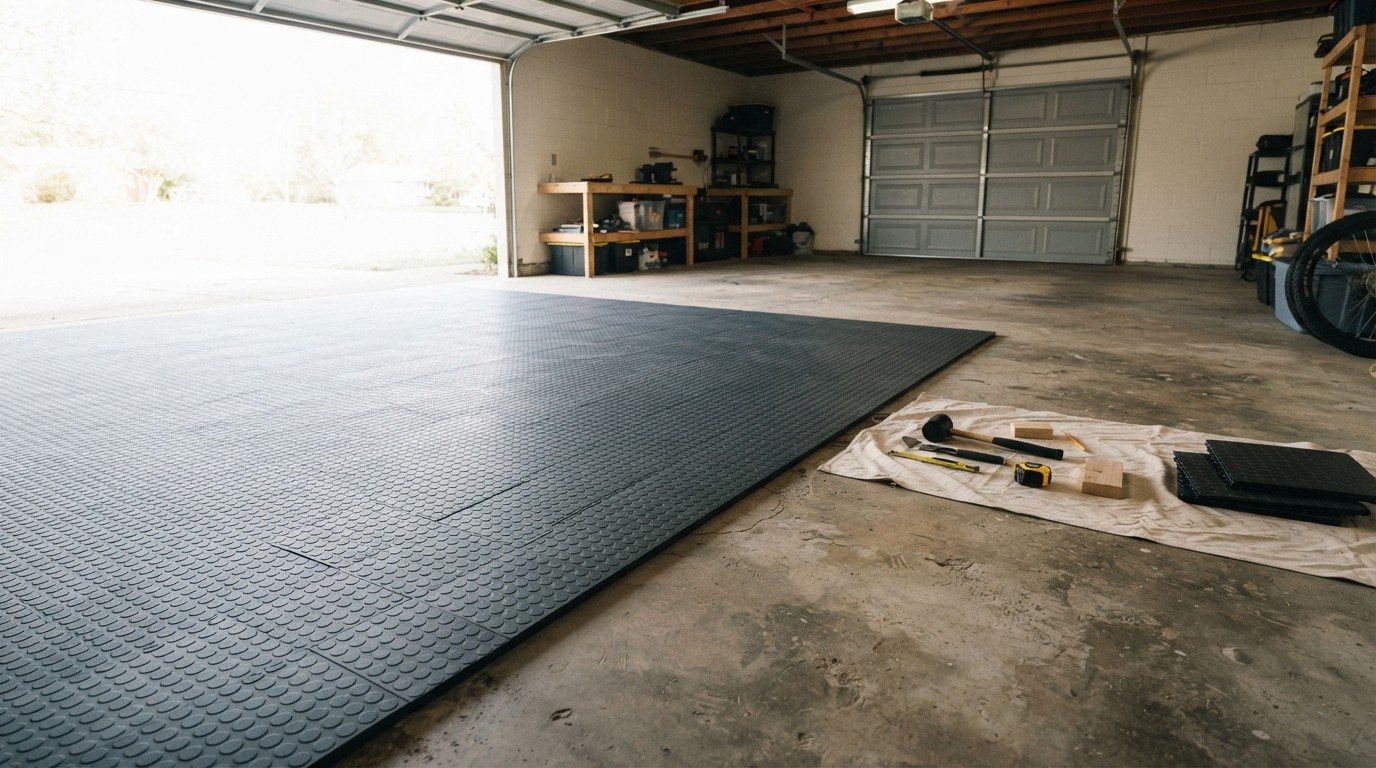
Interlocking tiles are modular squares, usually made from rigid polypropylene or flexible PVC, that click together and float on top of the slab. They are not bonded to the concrete.
Rolled mats are large flexible sheets, typically PVC, that lie over the floor in one or two pieces and are trimmed to fit. Like tiles, they are not bonded.
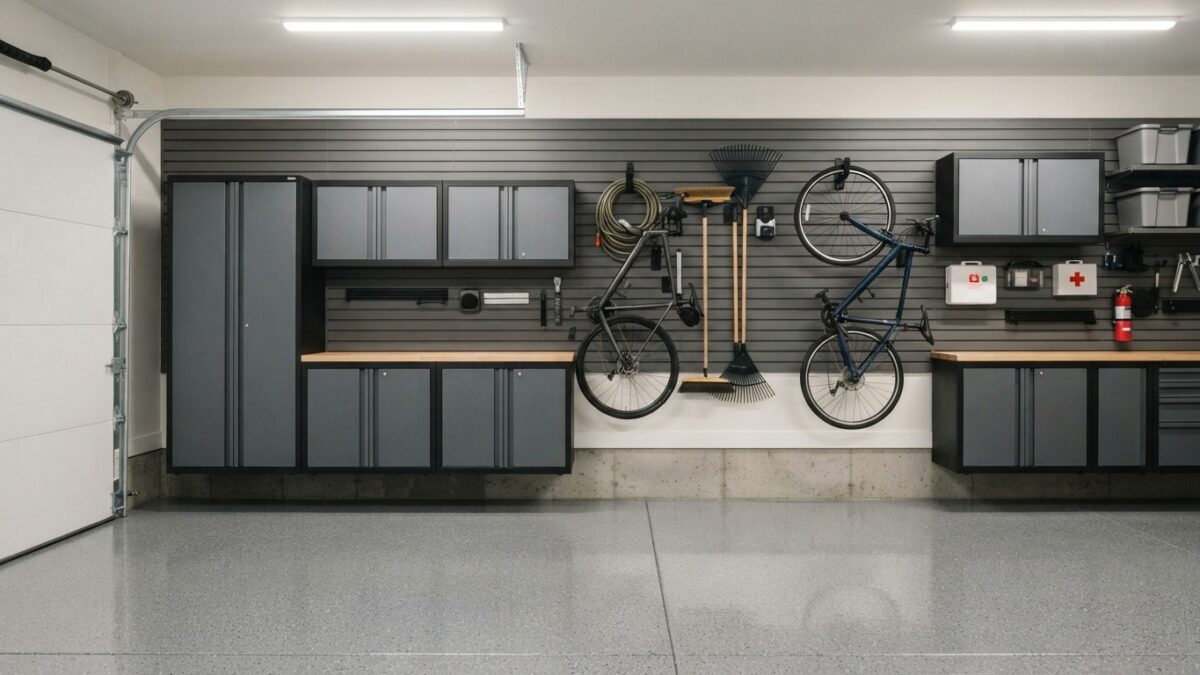
Coatings are liquid systems that are applied to the prepared slab and cure into a continuous film bonded to the concrete. They are the only one of the three that depends on the slab for adhesion.
That single distinction, bonded versus floating, explains most of the trade-offs that follow.
Moisture: where the approaches diverge most
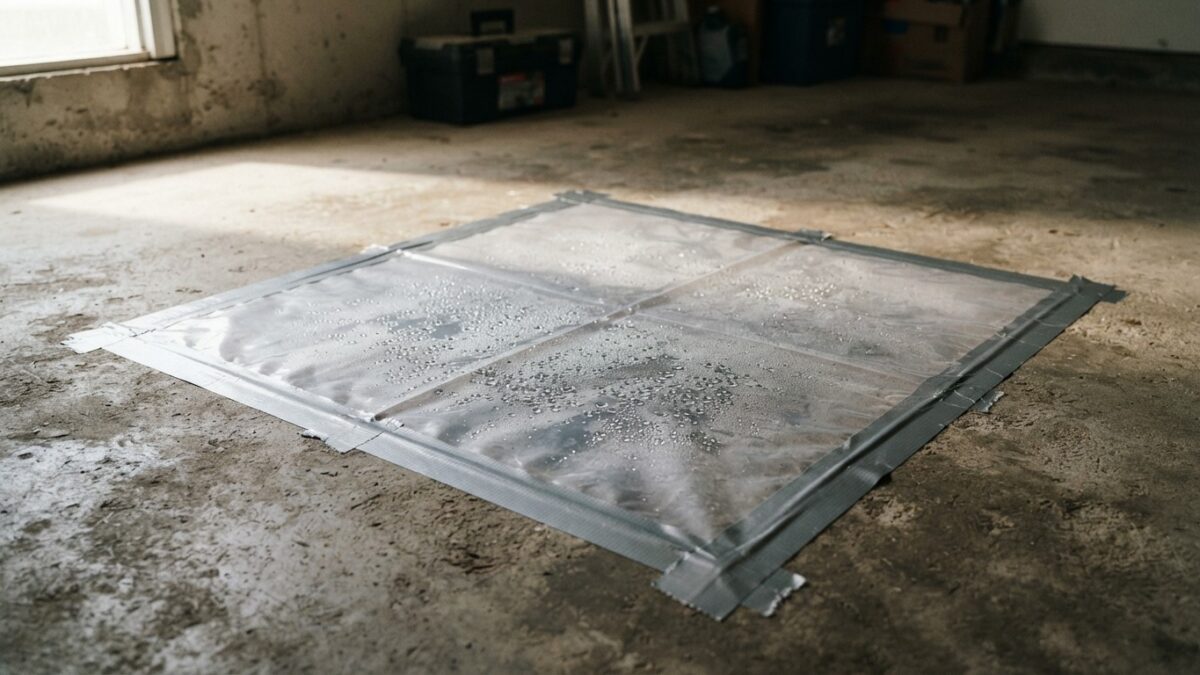
Concrete is porous, and slabs on soil constantly transmit some moisture vapour from below. A bonded coating seals that vapour in, so moisture pressure builds under the film and eventually lifts it. This is the leading cause of coating failure on problem slabs, and it is discussed in detail in our guide to testing for moisture.
Floating tiles with open grid designs let vapour escape through the gaps and are a sensible choice on a slab you suspect is damp. They do not cause a bonded failure because nothing is bonded. The trade-off is that water can collect underneath and, if never cleaned out, can encourage staining or odour beneath the tiles.
Rolled mats cover the whole floor and hold moisture beneath them, which can make a damp problem worse. They are best on a slab that is dry.

Hot tires and chemicals
A warm tire is a demanding test. Coatings that have not fully cured can soften and lift under it, which is why cure schedules matter. Once properly cured, a well-applied coating handles tires well.
Some soft vinyl tiles and mats can interact with tire rubber and stain, as the plasticizers in the vinyl and the compounds in the tire migrate. This is not universal, and rigid polypropylene tiles generally behave differently, but it is worth asking the manufacturer specifically about tire staining before you buy.
Spills are easier on a continuous surface. A coating can be wiped. Liquids can run through tile seams and settle underneath, so a tile floor is best used where you do not expect heavy fluid spills, or where you are willing to lift the tiles and clean beneath them occasionally.
Temperature and comfort
Plastic tiles expand and contract with temperature. A garage that swings from freezing nights to hot afternoons moves the floor, and that is why installation guides call for a small expansion gap around the perimeter. Fit them tight to the walls in winter and they may buckle in summer.
In cold weather some tile materials become stiffer and more brittle. That matters mostly for impact: dropping something heavy on a cold, rigid tile is more likely to crack it.
Underfoot, tiles and mats are warmer and more cushioned than bare concrete or a hard coating. If you spend long hours standing at a workbench, that is a genuine comfort benefit, and it is one coatings cannot match without an added mat.
Installation and permanence
Tiles and mats go down in an afternoon, need no cure time, and can be driven on straight away. They are forgiving of slab imperfections that would sabotage a coating, such as minor cracks and pits, and can cover a stained or damaged floor. They can also be lifted, moved or taken with you.
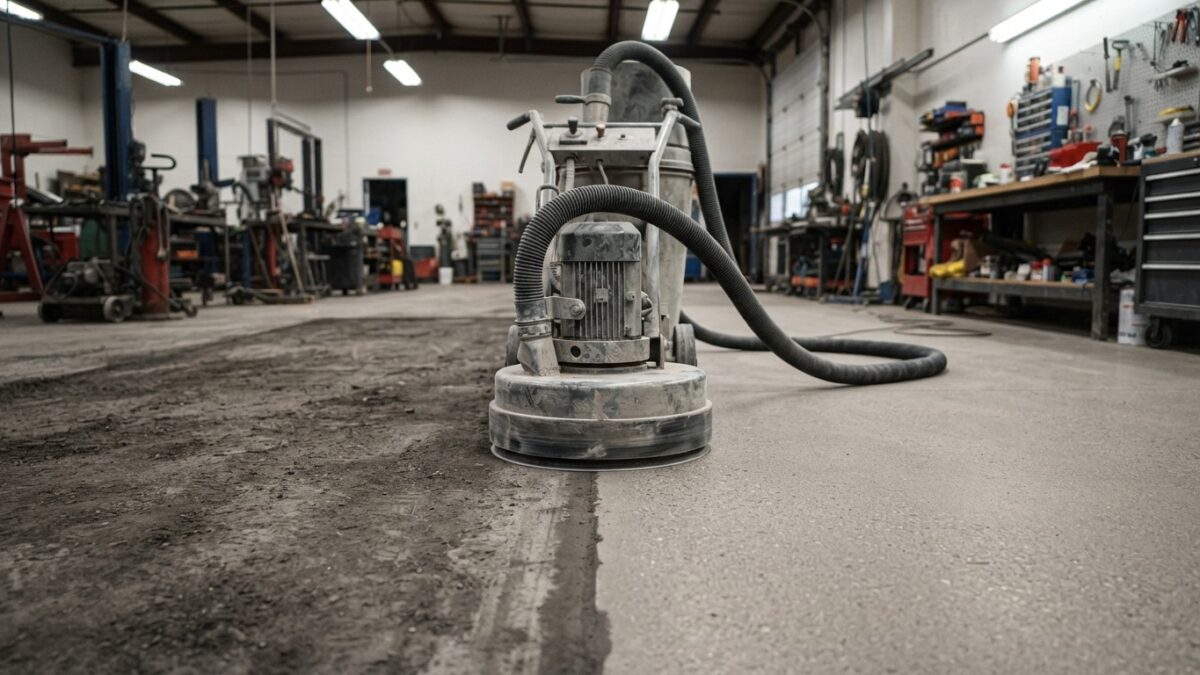
A coating requires preparation, careful conditions and time before use, and is effectively permanent. Removing a failed coating means grinding it off, which is labour-intensive. That permanence is an advantage when it works and a significant cost when it does not.
Three options, row by row
| Factor | Interlocking tiles | Rolled mats | Coating |
|---|---|---|---|
| Bonded to slab | No | No | Yes |
| Damp slab | Reasonable, with open-grid designs | Poor | Poor without moisture control |
| Hides slab damage | Yes | Yes | Partly |
| Spill cleanup | Seams let fluid through | Wipes clean | Wipes clean |
| Time to use after install | Immediate | Immediate | Hours to days |
| Reversible | Yes | Yes | No |
| Underfoot comfort | Good | Good | Hard |
| Appearance | Modular, visible seams | Sheet, can curl at edges | Seamless |
| Main failure mode | Buckling, staining beneath | Curling, trapped moisture | Peeling from the slab |
Choosing by situation
- You rent, or may move soon. Tiles or a mat. They can be removed and reused, and they do not alter the property.
- The slab is damp or you are unsure. Open-grid tiles. Do not coat until a moisture test says it is safe.
- The slab is cracked, pitted or stained. Tiles or mats cover cosmetic damage without repair. Structural cracks still need a professional.
- You want it to look like a showroom and the slab is sound and dry. A properly applied coating gives the most polished, seamless result.
- You work in the garage for hours. Tiles or a cushioned mat in the working area, even if the rest is coated.
- You live where the garage freezes hard. Check the tile or mat material’s stated low-temperature behaviour, or consider a flexible coating system.
- Resale is on your mind. A coating in good condition is often seen as an upgrade. A failing one is a liability, so be honest about the slab.
Installing tiles or a mat well
- Sweep and vacuum thoroughly. Grit under tiles wears at them over time.
- Let the slab be dry. Do not lay a floating floor over standing water.
- Leave the expansion gap the manufacturer specifies around the walls.
- Lay tiles in a pattern that avoids lining up every seam, if the manufacturer allows it, and stagger edge pieces.
- Check that your jack stand pads and heavy toolbox feet will not concentrate load on small areas. Follow the stated load ratings.
- Lift and clean beneath the floor on a schedule, particularly in damp climates or after a spill.
There is no universal winner here, and the honest answer for many garages is a hybrid: a coating where the slab is sound and the use is hard, tiles where comfort or moisture is the issue, and a mat under the car in a rental. Choose by what the slab and your circumstances actually allow, and reserve the permanent option for a slab you have tested.
Mistakes to avoid with floating floors
- Fitting tiles hard against the walls instead of leaving the expansion gap the maker specifies.
- Laying a floating floor over a wet slab and never lifting it to clean underneath.
- Choosing soft vinyl without asking the maker about tire staining.
- Putting jack stands on small pads without checking the stated load rating.