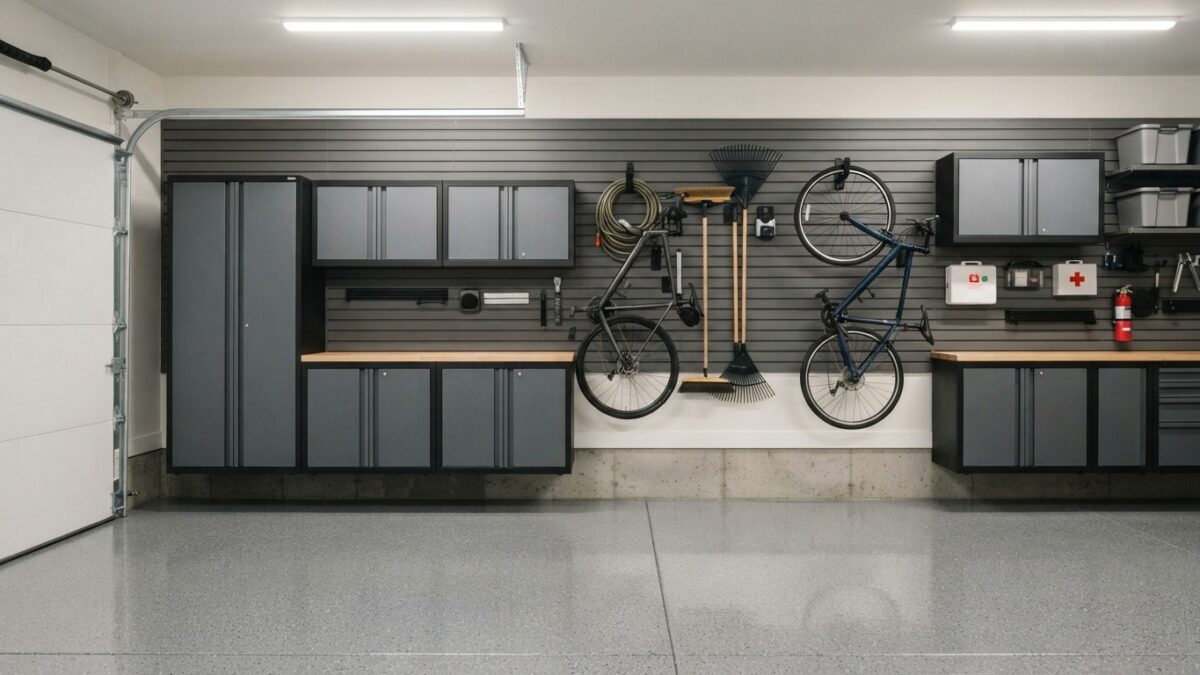
Walk down the garage-floor aisle of a home center and every box makes the same promise: a showroom finish that resists hot tires, oil and chemicals. The labels differ mostly in the vocabulary. Epoxy, polyaspartic, polyurea, polyurethane, “100 percent solids,” “military grade.” The words are doing a lot of marketing work and very little explaining.
Underneath the vocabulary there are real differences, and they decide how forgiving the job is, how long you stay out of the garage, and how the floor looks in year three. This guide explains what each coating family actually is and which situations favor which.
Short answer: for most garages a two-part epoxy or polyurea base under a UV-stable polyaspartic or polyurethane topcoat gives the best balance. The name on the box matters far less than the preparation underneath it and the topcoat above it.
In this guide
- What a coating system really is
- Epoxy: the long-standing workhorse
- Polyaspartic: fast, stable and unforgiving
- Polyurea: the flexible base
- The topcoat matters more than people expect
- The three families compared
- How coatings fail, and why it is rarely the coating
- Questions to ask an installer, or yourself
- A note on safety and instructions
- Which one for which garage
- Frequently asked questions
What a coating system really is
Almost no professional floor is a single coat of anything. A coating system is a stack of layers, and each layer has a job. A primer or base coat bonds to the prepared concrete. Decorative flakes or a pigment layer provide colour and texture. A clear topcoat protects against abrasion, chemicals and sunlight.
The names people argue about usually refer to one layer in that stack. When somebody says they have an epoxy floor, they might mean epoxy at every layer, or epoxy underneath a polyaspartic topcoat. That is why comparing products by name alone goes wrong. Compare the stack.
Epoxy: the long-standing workhorse
Epoxy is a two-part material: a resin and a hardener that react chemically when mixed. It bonds well to properly prepared concrete, builds thickness in a single pass, and fills small surface imperfections. For many garages it is a sensible base coat.
Epoxy products come in several forms that behave differently. Water-based formulations are easier to handle and have a gentler odor, but they go on thin and wear faster. Solvent-based formulations penetrate and bond well but release more fumes while they cure. “100 percent solids” formulations contain no carrier to evaporate, so what you apply is what stays on the floor, and they tend to be the thicker, longer-lasting group.
Where epoxy is weak. It is not stable in sunlight. Ultraviolet exposure turns many epoxies amber or chalky over time, which is why a garage with a sunlit door opening often shows a yellowed stripe near the threshold. It also cures relatively slowly and is sensitive to cold and damp during application, so the working window in spring and autumn can be narrow.
Polyaspartic: fast, stable and unforgiving
Polyaspartic coatings are part of the polyurea family, engineered to cure quickly and to resist ultraviolet light without yellowing. That makes them a common topcoat over an epoxy or polyurea base, and some contractors use them as the whole system.
The fast cure is both the appeal and the hazard. A short working time, often measured in minutes once mixed, means the installer has to move quickly and keep a wet edge. Contractors with experience manage it well. First-time DIYers frequently leave lap marks or hardened streaks. Cure speed also lets professionals finish a floor in a day, which is the main reason it costs more than slower systems.
Where polyaspartic is weak. Cost, a steeper learning curve, and a strong dependence on preparation, because a fast-curing film that is bonded to a poorly prepared slab fails just as quickly as any other.
Polyurea: the flexible base
Polyurea cures very quickly and stays flexible, which helps it handle the movement of a slab through temperature swings. It is frequently used as a base coat under a polyaspartic or polyurethane topcoat. On its own, certain aromatic polyureas can darken in sunlight, which is part of why they are rarely left exposed.
For a homeowner, the practical point is that “polyurea” in a quote often means a hybrid: a polyurea base with a polyaspartic or urethane top. Ask which product is at which layer, how thick each layer is, and what the manufacturer says about the system as a whole.
The topcoat matters more than people expect
Whatever the base, the topcoat is what meets the tire, the salt, the dropped wrench and the sun. A polyurethane or polyaspartic clear coat adds abrasion resistance and ultraviolet stability that an epoxy alone lacks. If you are choosing a single upgrade within a limited budget, a good topcoat over a sound base is often more valuable than a thicker base.
Texture belongs here too. A fully glossy floor is slippery when wet, and snow melting off a car makes a garage a wet space for months. Many systems include an anti-slip additive or a textured finish, and it is far easier to specify at the start than to correct later.
The three families compared
| Factor | Epoxy | Polyaspartic | Polyurea |
|---|---|---|---|
| Cure speed | Slower, often a day or more before light use | Very fast | Very fast |
| Sunlight stability | Tends to yellow or chalk | Stable | Varies; often topcoated |
| Working time once mixed | Moderate | Short | Short |
| Forgiveness for DIY | Higher | Lower | Lower |
| Flexibility | Rigid | Moderate | Flexible |
| Typical role | Base coat or full system | Topcoat or full system | Base coat |
| Relative cost | Lowest of the three | Highest | Middle to high |
Treat the cost row as a ranking, not a price. Actual prices vary enormously by region, floor size, and the condition of the slab, and the largest line item is usually labour and preparation rather than the coating itself.
How coatings fail, and why it is rarely the coating
- Peeling and delamination. The coating let go of the concrete. Nearly always a preparation or moisture problem, and covered in our guides on surface preparation and moisture testing.
- Hot-tire pickup. Tire marks lift the coating when a warm tire sits on a film that has not fully cured or is too thin. Following the manufacturer’s cure schedule before parking matters more than the brand.
- Pinholes and bubbles. Air escaping from the slab while the coating is still liquid. Commonly caused by applying while the concrete is warming, because warming concrete releases air upward into the film.
- Amber discolouration. Ultraviolet exposure on an unprotected epoxy surface. Solved by choosing a stable topcoat.
- Slippery surface. A glossy finish with no texture. Solved at specification time, not afterwards.
Questions to ask an installer, or yourself
- What exactly is each layer, and what is the manufacturer’s stated thickness for each?
- How is the slab being prepared, and will it be ground or etched?
- Has the slab been tested for moisture, and what happens if it fails?
- What is the topcoat, and is it stable in sunlight?
- How long before I can walk on it, drive on it and park a warm car on it?
- What texture or anti-slip additive is included?
- What does the warranty actually cover, and what voids it?
A good answer to the second question carries more weight than any brand name. Every coating family performs well on a well-prepared, dry slab and poorly on a bad one.
A note on safety and instructions
Coatings, hardeners and solvents carry real hazards, including fumes and skin and eye irritation, and some require specific ventilation and protective equipment. Nothing here replaces the manufacturer’s safety data sheet and installation instructions for the specific product you are using. Read both before you open a container, and if a job feels beyond your experience, hire a professional.
Which one for which garage
A sunlit, attached garage that you want finished in a day: a professionally applied polyurea or epoxy base with a polyaspartic topcoat is the usual answer, and the cost reflects the speed.
A DIY weekend project on a sound, dry slab: a two-part epoxy base with a stable clear topcoat and an anti-slip additive gives the most forgiving working time, provided you accept a longer cure.
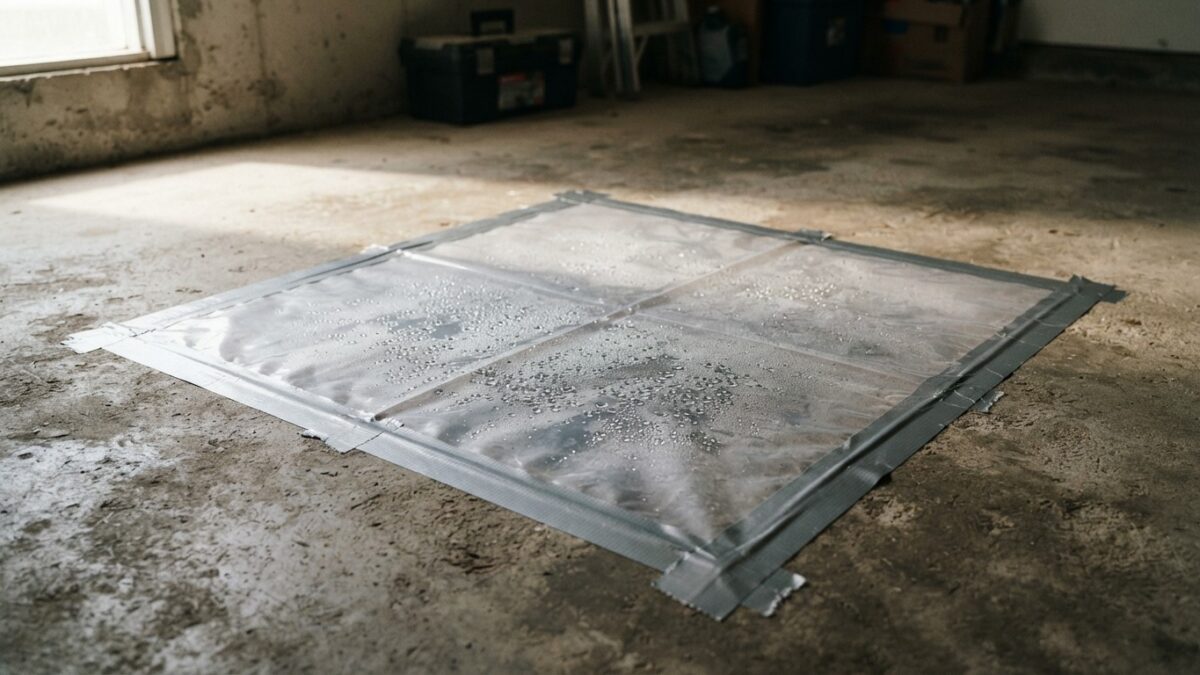
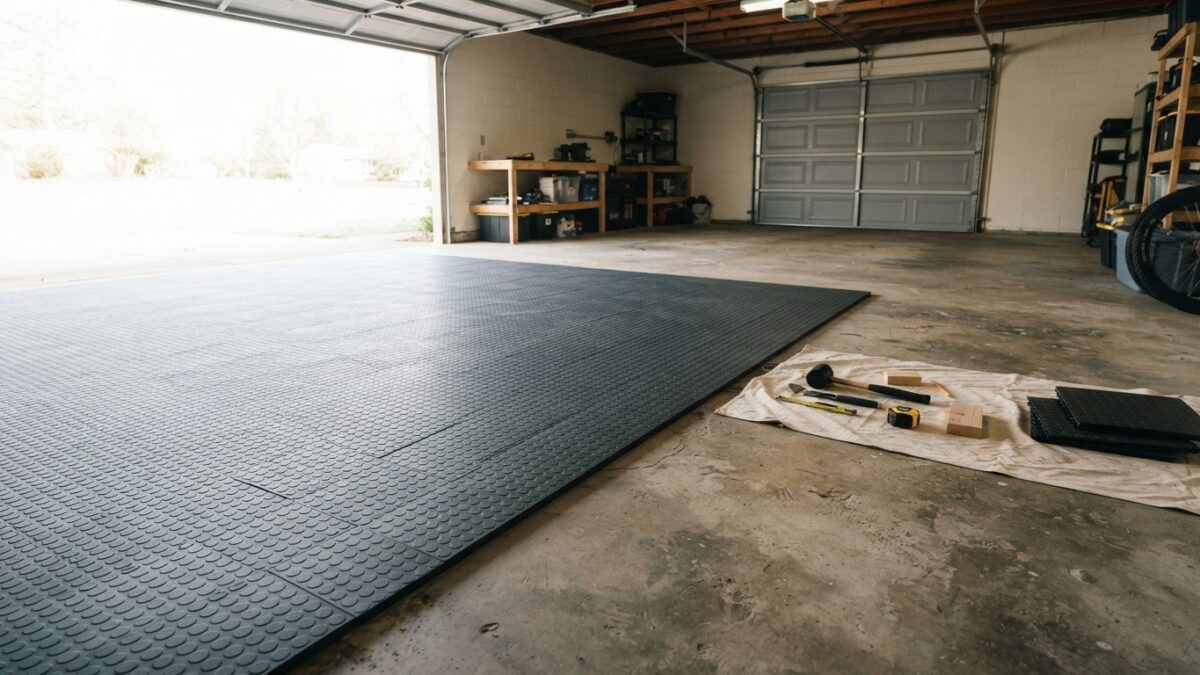
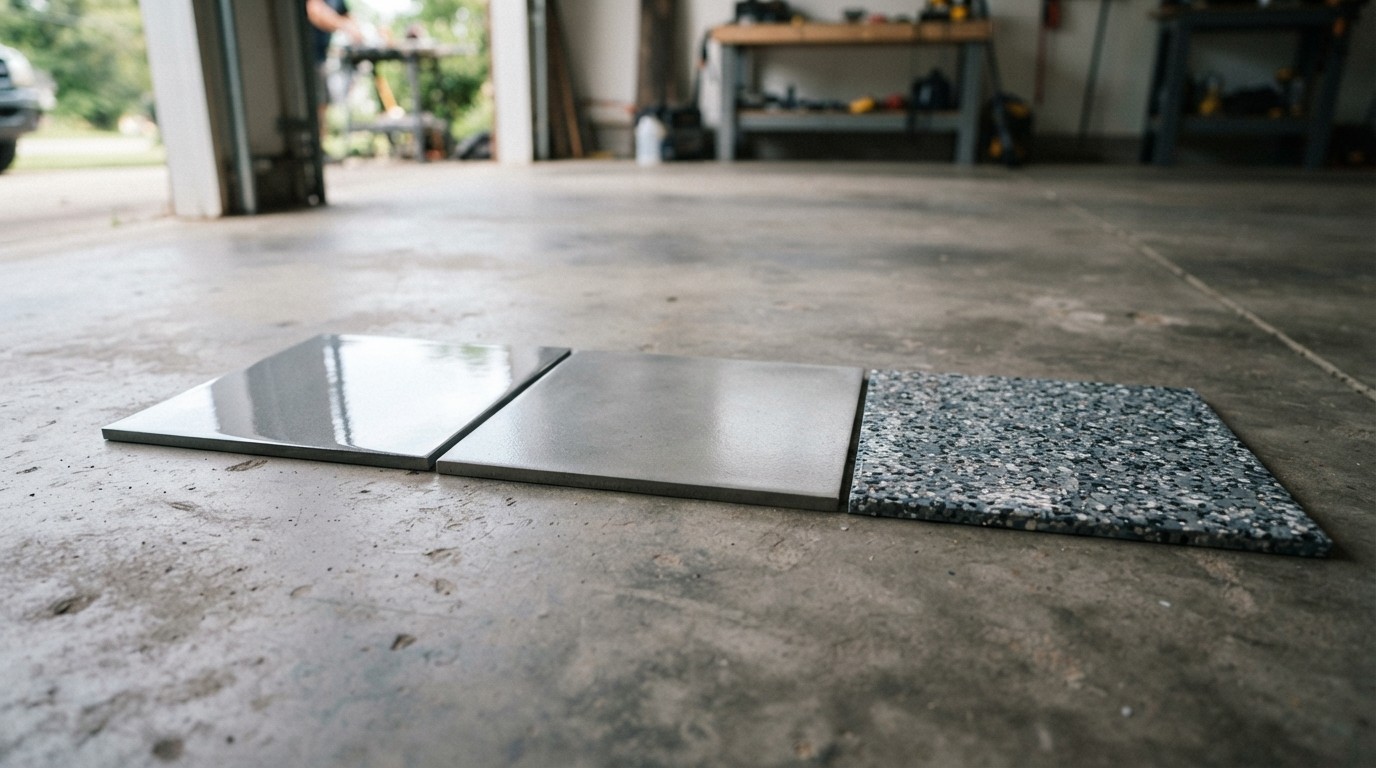
A damp slab or a rental: consider whether a coating is the right answer at all. Our comparison of tiles, mats and coatings covers the alternatives.
Whichever you choose, decide on the whole stack and the preparation first, and the brand last. The coating is the visible part of the job and the smaller part of the outcome.
Frequently asked questions
Can I just buy a one-coat kit and be done?
You can, and some hold up for a while on a dry, well-prepared slab. But a single thin coat has nothing to protect it from tires, salt or sunlight. A base plus a protective topcoat is the usual standard for a reason.
How long before I can park on it?
It depends on the product and the temperature. Fast-curing systems can be driven on after a day or less, while slower epoxies often need several days before a warm tire sits on them. Follow the manufacturer’s cure schedule, not a general rule.
Will it look good if the door is open all summer?
Only if the topcoat is stable in sunlight. An exposed epoxy tends to amber, which is why a polyaspartic or urethane clear coat is commonly specified in sunny garages.